Today’s chosen theme: Risk Management Tools for Modern Finance. Step into a practical, story-rich tour of the tools reshaping risk decisions—built for speed, clarity, and resilience. Subscribe, comment, and shape future explorations.

Why Modern Finance Needs a New Risk Toolkit

From Gut Feel to Evidence-Based Decisions

A treasury lead once told me their ‘VaR’ lived in three spreadsheets and a prayer. Migrating to a cloud Monte Carlo engine exposed hidden basis risks and unified decisions across trading, finance, and audit.

Speed, Scale, and Transparency

Real-time risk dashboards surface exposures as prices evolve, not tomorrow morning. Elastic compute crunches scenarios on demand, while clear audit trails build trust with model risk teams and regulators during tough conversations.

Your Role in a Resilient Risk Culture

Tools only matter if people use them. Bring traders, quants, and controllers into design workshops, capture sticky pain points, and commit to iterative releases. Share in the comments what collaboration model worked best.

Market Risk: Measuring What Moves

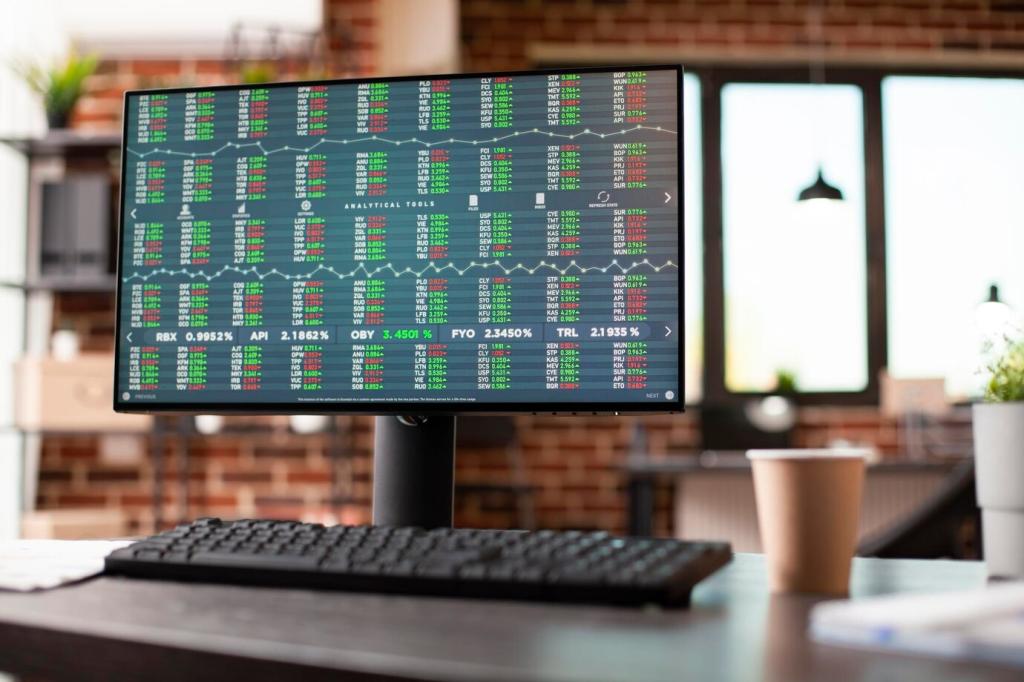
Move beyond weekly VaR PDFs. Intraday VaR with component contributions highlights which desks drive risk, triggering pre-agreed de‑risking playbooks. One client cut spread risk by half within two volatile sessions.

Market Risk: Measuring What Moves

Expected Shortfall complements VaR by illuminating losses in the worst slices of the distribution. During March 2020, firms using ES-driven limits reacted earlier to liquidity fractures, protecting scarce collateral and trading capacity.

Market Risk: Measuring What Moves

Blend historical shocks with narrative scenarios: taper tantrum, energy embargoes, cyber-induced exchange outages. Calibrate liquidity haircuts, not just prices. Tell us which scenarios your team rehearses before quarterly risk committee meetings.

Market Risk: Measuring What Moves

Lorem ipsum dolor sit amet, consectetur adipiscing elit. Ut elit tellus, luctus nec ullamcorper mattis, pulvinar dapibus leo.

Credit Risk: Seeing Beyond the Score

Augment bureau data with transaction flows, supplier invoices, and network signals. A regional lender spotted stress in a logistics borrower weeks early, thanks to shrinking route density and rising payment delays.

Liquidity Risk: Surviving the Dry Spells

Combine ERP events, card settlements, and bank APIs to refine daily cash ladders. A retailer dodged a crunch by pulling forward inventory financing after forecasts flagged an unexpected holiday demand surge.

Liquidity Risk: Surviving the Dry Spells

Intraday monitors track RTGS queues, collateral usage, and payment priorities. Alerts help treasury defer low-urgency outflows and free buffers, preventing costly overdrafts when markets are jittery and settlement windows narrow.
Map processes to controls, metrics, and loss events. After a misrouted payment near-miss, one team automated maker-checker controls and reconciliations, cutting exceptions in half and restoring trust with counterparties and auditors.

Operational and Cyber Risk: The Human-Tech Nexus

Continuous monitoring combines security ratings, breach feeds, and financial signals. A supplier bankruptcy rippled across fulfillment; visibility helped reroute orders within hours and update exposure limits before losses multiplied.

Operational and Cyber Risk: The Human-Tech Nexus

RegTech, AI, and the Road Ahead

Pair gradient boosting or transformers with explainability: SHAP values, feature drift monitors, and model cards. When anomalies appear, analysts can challenge outcomes quickly, preserving fairness, stability, and regulatory credibility.

RegTech, AI, and the Road Ahead

A single, governed data model drives disclosures, risk metrics, and XBRL. One bank retired twelve midnight batches after streaming pipelines aligned trades, valuations, and reference data, eliminating reconciliation headaches and weekend fire drills.
Haatejai
Privacy Overview

This website uses cookies so that we can provide you with the best user experience possible. Cookie information is stored in your browser and performs functions such as recognising you when you return to our website and helping our team to understand which sections of the website you find most interesting and useful.